
Before the Pencil Grip: Start with Crayons and a Story
I loved encouraging my kids to draw and color. When they were little, my diaper bag always had crayons and a coloring book tucked inside — my go-to for a distraction when I needed one.
We used chalk on the sidewalk at the park. And every so often, his favorite picture got sent to grandma. At the time it was just coloring to me. Looking back, it was the practice that comes before writing.
So if you've quietly worried about how he holds a pencil — or how hard he presses — it may help to know the grip isn't a separate skill to drill. It grows out of the drawing he's already doing.
Drawing is the practice that comes before writing
Before a child can form a letter, his hand has to learn the strokes letters are made of — the line down, the line across, the curve, the diagonal. He learns those by making them over and over in low-stakes ways: scribbling, coloring, drawing, chalk on the pavement. Every picture is a rep. He's writing already; he just doesn't have letters yet.
The one stage both my sons hit on schedule
Here's the part that still reassures me. My two boys learned almost everything at completely different paces — one raced ahead in some things, the other in others. But drawing and coloring? That was the one stage of learning they both went through at the same pace, right around when you'd expect it.
Drawing is the natural foundation. You hand a child crayons, give him plenty of chances, and the skill unfolds the way it's meant to. If his grip isn't where you hoped yet, you're almost certainly not behind.
You're watching a process that runs on its own clock — and your job is just to keep the crayons coming.
Keep it playful, and he'll keep going
What I noticed with my own kids was simple: they drew the most when it didn't feel like a test. A coloring page they liked, chalk at the park, a picture for grandma — there was no line to get right, so they kept going.

And the more they drew, the more their hands grew into it. So you don't have to fuss over how he's holding the crayon — you keep handing him things he wants to draw on, and let the practice happen the way play does.
Give his hand a story to follow
This is why story-based coloring does the quiet work a drill page can't. A few low-pressure ways to build real control:
- Color inside a story page — relaxed, sustained hand movement, with a picture he cares about as the payoff.
- Trace a path through a maze — the straight, horizontal, and diagonal strokes letters need, dressed up as "help the bunny get there."
- Draw himself into the scene — open-ended marks that strengthen the hand while he leads the page.
The pre-writing strokes hiding in his coloring
Every crayon line is practice for a named pre-writing milestone — the strokes that become letters:
A low-pressure way to build real control
DexteDoodle Story Learning turns one story into pages he colors, traces, and draws himself into — every line tied to a named pre-writing stroke he needs before kindergarten, and not one of them feeling like a drill page. He plays. His hand learns. You can point to the stroke each page built.
Let him color, trace, draw, and create — and watch the control follow.
Get the Free Kindergarten-Readiness Checklist
Every kindergarten-readiness skill on one printable — including the pre-writing strokes his drawing is already building, so you can see them add up.
Take the free readiness check →Would you rather have it as a printable? Pop your email in and the PDF comes straight to your inbox.
No spam — just readiness help from one homeschool mom. Unsubscribe anytime.
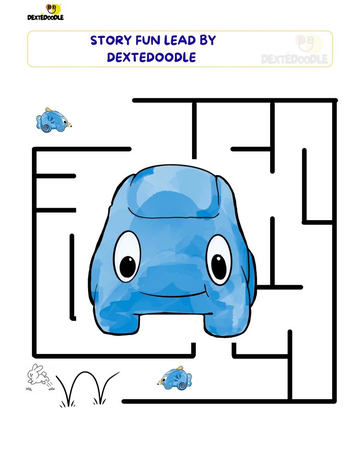
A low-pressure way to build real control
DexteDoodle Story Learning turns one story into pages he colors, traces, and draws himself into — every line tied to a named pre-writing stroke, and not one feeling like a drill.
Get DexteDoodle Story Learning →
Before you go
I read every note. If this helped — or you're not sure where your child is on the road to kindergarten — I'd love to hear from you at kasandra@dextedoodle.shop.