
You Don’t Need a Math Workbook — Hands-On Counting for Ages 3–5
My youngest is a visual and tactile learner. If a number was only ink on a page, it slid right past him. But if a number was something he could touch and hold — that stayed.
So we never really used a math workbook for counting. We attached counting to something instead: to beans, to miniature toys, to anything he could touch and engage with. I even brought out my old childhood abacus, because I noticed it held his attention like nothing else — he did so much better when he could count by touching something and relating the number to it.
If you have a child who goes limp at the sight of a workbook page, this one’s for you. Here are five ways to teach counting with things you already own.
1. Start with beans
A handful of dried beans is the best counting tool in your kitchen. Count them into a cup one at a time, his finger pushing each one. Line them up and count the row. Ask for “three beans” and let him hand them over.
What’s happening underneath: every bean is one number — touch it, say it, move it. That one-number-for-one-thing matching is the true foundation of counting, and it’s built through his fingertips.
2. Raid the toy bin for miniatures
Whatever small toys your child already loves — animals, cars, blocks — are already math supplies. Park three cars in a row and count them into the “garage.” March five animals across the table, counting each stomp.
The toys matter because the love is already there. You’re not selling him on counting; you’re adding counting to something he was going to play with anyway.
3. Bring out the abacus (or make one)
The abacus was our turning point. Something about sliding a bead along the wire — one push, one number — kept my youngest’s attention long after paper had lost it. Each number had a weight and a click he could feel.
No abacus in the closet? Thread large beads on a shoelace, or clip clothespins along the edge of a box. The magic isn’t the wooden frame — it’s a number he can move with his own hand.
Counting tools you already own
4. Count on the move
Some children need their whole body in the lesson. Count the stairs as you climb them. Count jumps on the trampoline, hops to the mailbox, scoops in the bath.
If your child is the kind who won’t sit still for learning, this is where counting takes hold first — because the movement isn’t the obstacle. It’s the way in.
5. Put the numbers inside a story
Here’s the step that pulled it all together for us: numbers stick best when they matter to a story your child is inside of. Counting five bunnies matters when he’s the one following the trail to find them. A page becomes something he does, not something he watches — he can trace it, color it, count his way through it with a finger before a pencil.
That’s the heart of how we build everything at DexteDoodle: read, move, color, and create.
Why touching works (in plain mom language)
When a number is only heard, your child holds it one way. When a number is also something he grips, slides, and moves, he holds it twice — the word and the feel of it, tied together. Two ways in means it’s far easier for him to find it again later.
He doesn’t need the lesson smaller. He needs it in his hands.
Skip the workbook standoff tonight
If you want counting pages built exactly this way, our free Mini Micro Stories maze pack is the easiest start: 12 tiny stories led by Dexte, each with a counting maze his finger can travel before his pencil does. Print it, hand it over, and meet them where they love to play.
It’s free at dextedoodle.com/free-maze-pack.html — the beans are on you.
Get the Free Kindergarten-Readiness Checklist
Every kindergarten-readiness skill on one simple printable — so the quiet “is he behind?” becomes a list you can watch him reach for, one check at a time.
Take the free readiness check →Would you rather have it as a printable? Pop your email in and the PDF comes straight to your inbox.
No spam — just readiness help from one homeschool mom. Unsubscribe anytime.
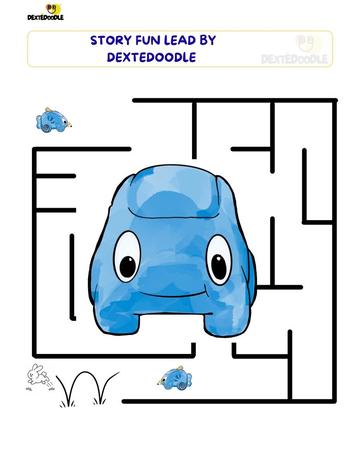
Built for the child who learns with his hands
One story he can maze, color, trace, and seek-and-find his way through — every page tied to a named readiness skill, made for the learner who has to touch it to keep it.
Get DexteDoodle Story Learning →

Before you go
I read every note. If this helped — or you’re not sure where your child is on the road to kindergarten — I’d love to hear from you at kasandra@dextedoodle.shop.